

If your pipeline feels messier than it should, your CRM is probably telling you why. You just need to know where to look.
This free guide covers the 10 most common signs we see in Salesforce orgs when the GTM motion has outgrown the setup holding it together. Stale opportunities, handoffs that aren’t well defined, and campaigns that never connect to closed revenue. None of it feels like a crisis until you realize it has been slowing you down for months.
If any of this sounds familiar, the guide will show you exactly where the drag is coming from.
Read the Salesforce diagnostic →
Read More
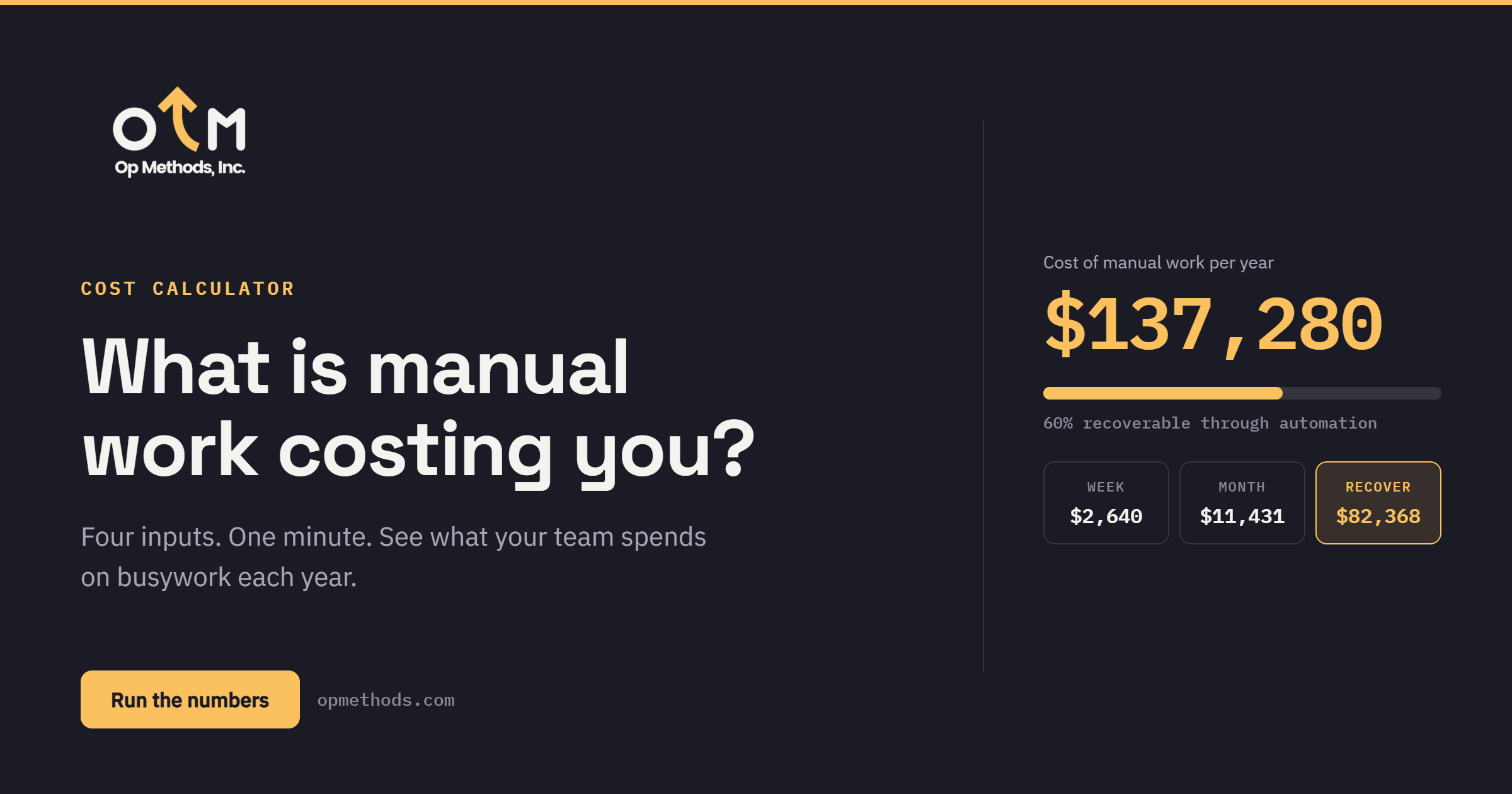
Manual work is easy to overlook because it's spread across the whole team: an hour updating records here, a report rebuilt by hand there, leads routed one at a time. This calculator adds it up.
Enter how many people do this work, how many hours they spend on it each week, and roughly what an hour of their time costs. You'll see what that work costs over a year and how much of it a well-set-up CRM could realistically take off their plate in the first year. It takes about a minute, and the number is usually bigger than people expect.

The fastest-growing teams don't run Salesforce out of the box. They run Flows in the background, routing leads, chasing no-shows and flagging stalled deals before anyone has to ask. This playbook covers the 10 automations we see most often on high-performing teams.
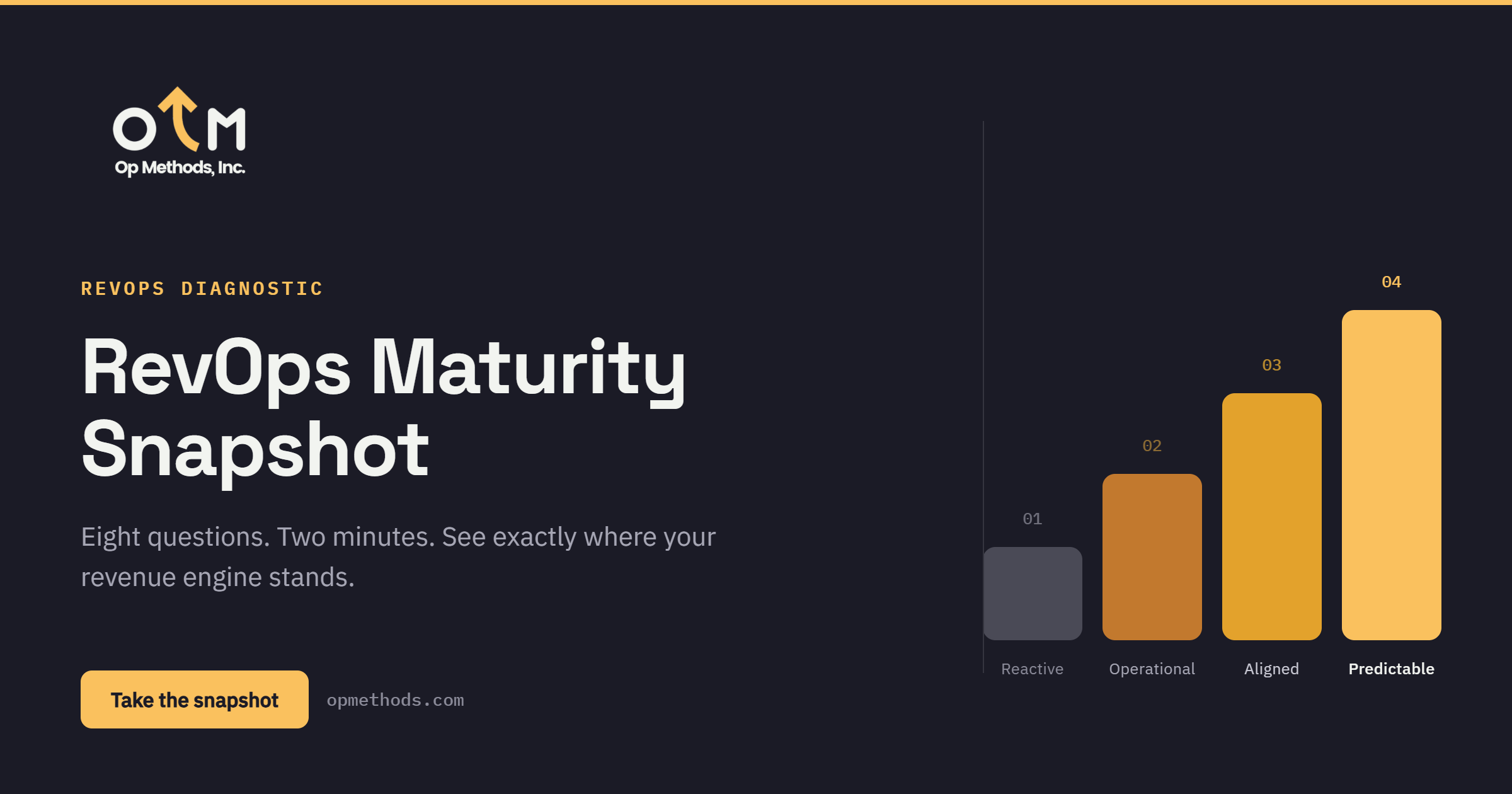
Eight questions across the six pillars of the RevOps Growth Curve. Answer honestly, takes about two minutes, and we'll show you exactly where your team lands right now.

You don’t need a broken CRM to have a GTM problem.
Sometimes everything looks fine on the surface, and the friction is just... there.
This guide covers 10 indicators we look for in HubSpot when a team suspects their setup has not kept up with how they actually sell and scale. Things like leads that sit too long, forecasts nobody believes, and reps running their own independent processes because the playbook lives in someone's head instead of the system.
